Fields of Math
Algebra
Algebra is the study of generalized arithmetics, known as the foundation of math. Algebra introduces new symbols and letters (x, y) to solve for unknown numbers (variables) and find equivalences applicable to the real world, whose main concept is trying to find the values of unknown numbers, or calculate the output in a way to apply to all inputs, using letters (most commonly, x) to substitute and represent these unknown values. Another important concept is using graphs to plot the inputs and outputs of an equation, so that we know how to find the value of a number (output/dependent variable) when we know the value of another number that influences the value of the former (input/independent variable).
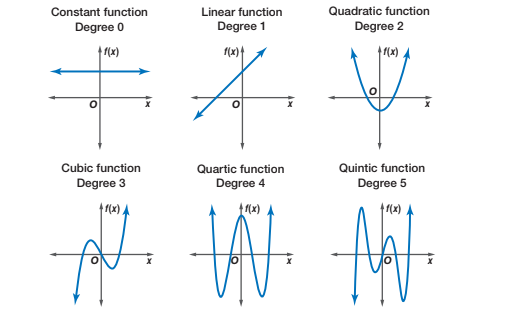
Polynomial equations are equations in which the input value (usually x) is raised to the power of 2 or more in order to get the output value (with the exponent referred to as the "degree" of an equation or graph). The image on the left shows the overall shape of a graph where the output is constant (degree 0), a graph that increases at a constant rate (degree 1), a graph where the slope, or the rate at which the output increases, is also increasing over time (degree 2) (going up even faster than before over time), a graph where the rate of that is increasing over time (degree 3), keeping the same pattern for the overall shape of polynomials with degrees 4 and 5.
Geometry
Geometry (which literally translates to "earth measurement") is the studies of shapes, mainly 2 dimensional shapes (plane figures) for more basic levels and 3d shapes for more advanced levels. This includes the sizes, shapes, positions, and other properties of these figures (points, lines, angles, surfaces) and their similarites to each other. Geometry (along with arithmetic) is one of the oldest and most fundamental branches of math, arguably one of the most useful types of math, being used countless times in the real world for measurements and such.
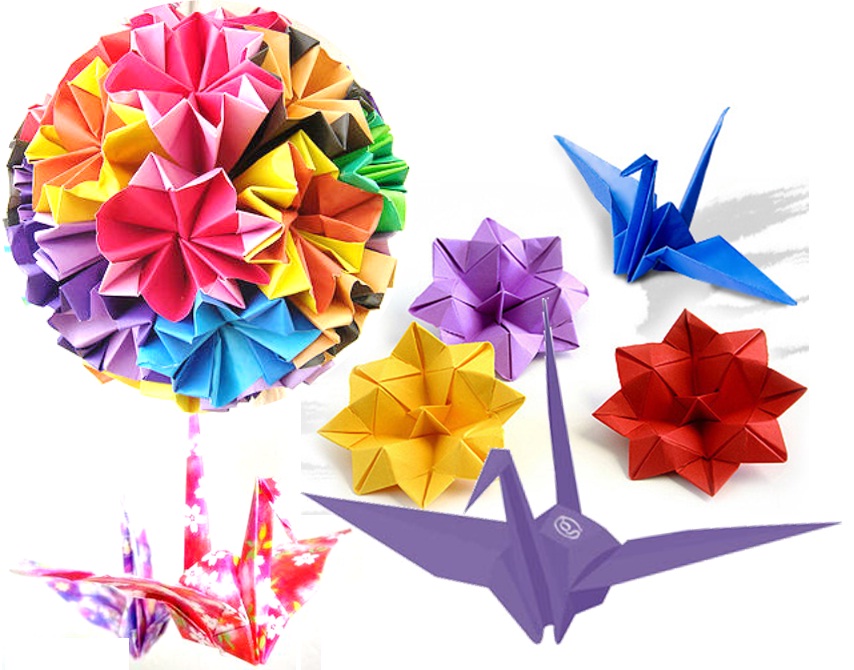
Geometry has a lot of real life applications, such as origami. Origami heavily relies on geometry, with geometric measurements and calculations having to be done in order to figure out how you can fold a paper and what size of paper you would need to create certain origamis.
Calculus
Calculus is the study of continous change, formerly referred to as infinitesimal calculus or calculus of infinitesimals before being shortened.There are two branches of calculus, being differential calculus, analyzing rates of change (AKA slopes) of curves, and integral calculus, analyzing quantities and areas under/between curves, whose two concepts are linked through the Fundamental theorem of calculus. Calculus also integrates advanced algebra and geometry (trigonometry) as tools, being prerequisites for doing calculations in calculus, which is why is it considered one of the hardest math courses.
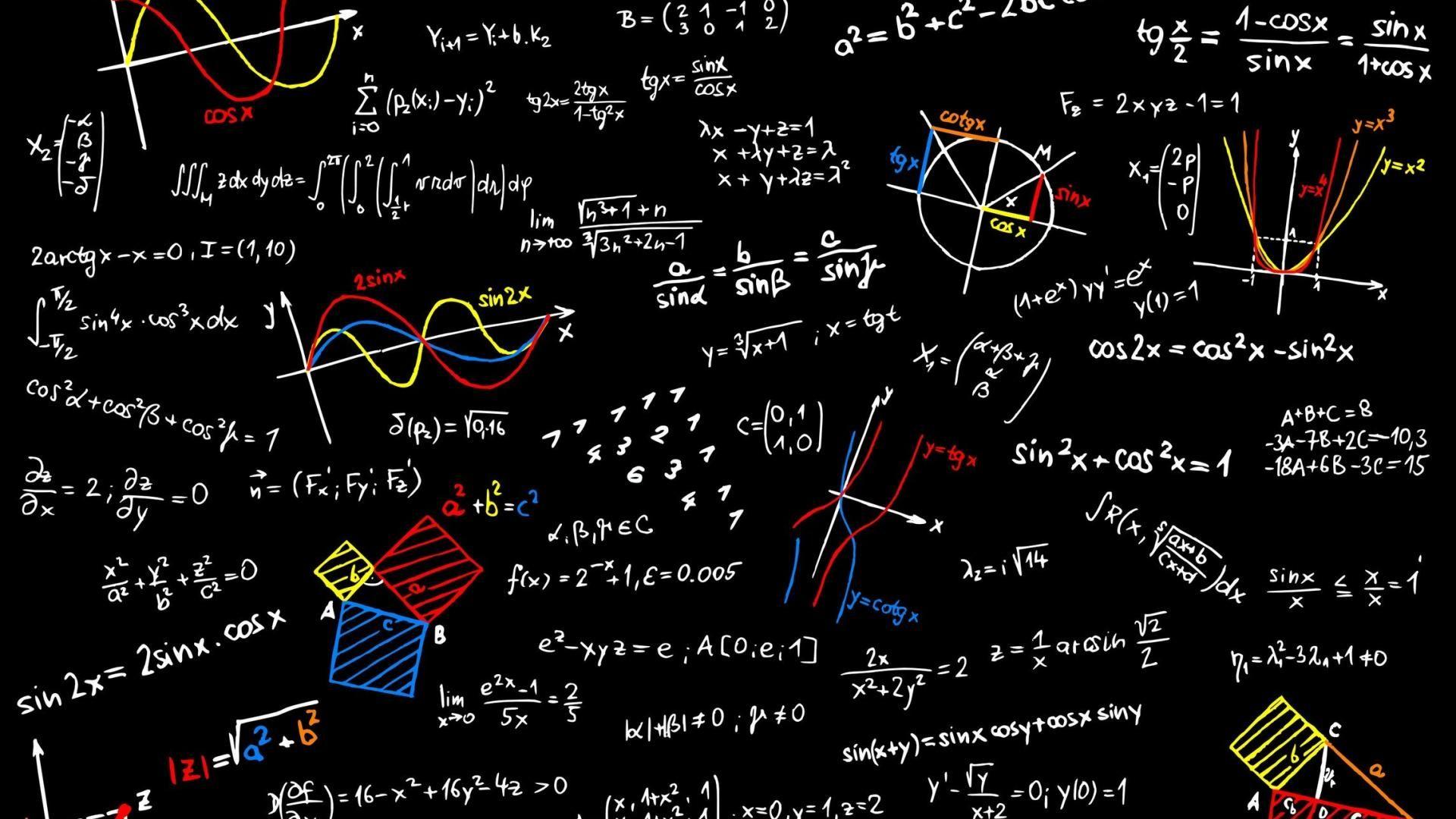
This image shows various examples of what calculus looks like. There are some noticable uses of algebra as functions and variables and some uses of geometry/trigonometry as sin/cos/tan, triangles, and circles.